Willa Black Prints NZ - Māori Art Guide
What is Māori Art?
A guide to its history, meaning, key themes, traditional forms and how to choose Māori art prints for your home with care and confidence.
Māori art is not decoration. It is whakapapa made visible. It can hold memory, identity, whenua, atua, whānau, grief, pride, beauty, resistance and renewal. At its heart, Māori art carries something deeper than style - it is connected to people, place and kaupapa.
Grounded in te ao Māori
Māori art, often referred to as toi Māori, is visual expression grounded in te ao Māori - the Māori world. Traditional forms include whakairo, tāniko, tukutuku, kōwhaiwhai, raranga, tā moko and others that carry meaning, function and whakapapa. These were never simply decorative. A carved meeting house, a woven cloak or a painted rafter could hold genealogy, tribal knowledge, mana, protection and spiritual meaning.
Contemporary Māori art continues that legacy but does not always look traditional. Today, Māori artists work across painting, photography, sculpture, print, digital illustration, installation, fashion, architecture and design. What makes work Māori is not only the pattern or motif - it is the kaupapa behind it. That kaupapa may be connection to whakapapa, whenua, language, identity, whānau, wāhine Māori, colonisation, resilience or cultural renewal.
Not every artwork that uses a koru or Māori-inspired pattern should automatically be understood as Māori art. Authenticity, authorship, intention and respect all matter.
Traditional forms and their echoes in contemporary work
Traditional Māori art forms continue to influence contemporary artists, designers and printmakers. Kōwhaiwhai - painted scroll patterns found on wharenui rafters - carry flowing curves, rhythm and repeated forms suggesting growth, movement and ancestry. In contemporary work, this influence appears through curved lines, mirrored forms and a sense of movement across the page.
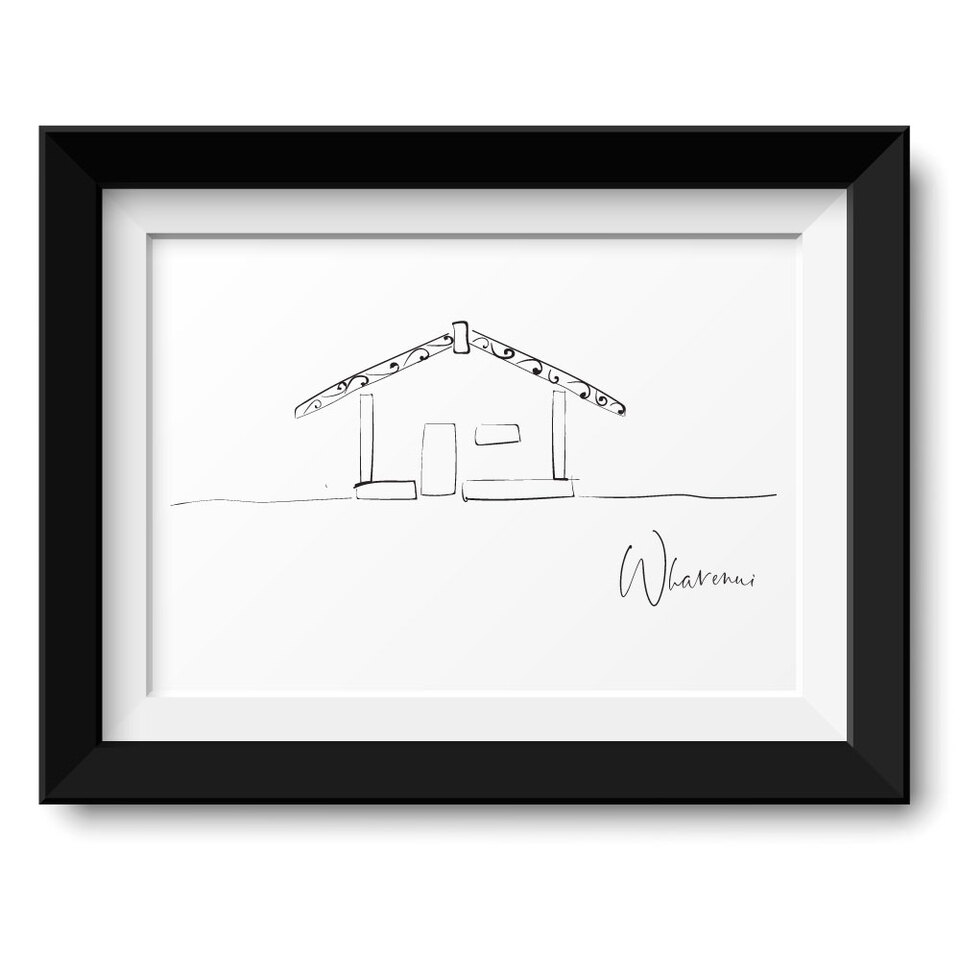
Tukutuku woven panels use geometric patterning to tell stories and represent values - their influence echoes through grids, triangles, diamonds and strong pattern logic in modern print design. Tā moko is a deeply significant form connected to identity, whakapapa and personal history, and should never be treated casually as a decorative pattern. Whakairo carving echoes in bold lines, strong silhouettes and symmetrical forms. The Wharenui line art print shows how traditional architecture can become a clean contemporary artwork.
These forms are not simply visual references - they carry their own histories, meanings and responsibilities.
Genealogy, connection and the layering of relationships between people, ancestors, land, atua and the natural world. In art, whakapapa appears as repeated forms, layered patterns, portraits, cloaks and visual references to ancestry.
See Te Kahu →Authority, dignity, prestige, spiritual power and presence. Visually expressed through strong posture, bold scale, confident linework, symmetry and deep contrast - the feeling that artwork holds space rather than simply filling it.
See Awhi Mai →Land and placenta - a reminder of the deep relationship between people and place. Appears through mountains, rivers, coastlines, earth colours and native plants. For people living away from home, Māori art prints can become a way of keeping place close.
Explore the collection →Wāhine Māori have long been powerful subjects and makers within Māori art. Portrait works explore beauty, strength, motherhood, mixed heritage, identity and cultural continuity - allowing people to see themselves reflected with dignity.
See Ko tēnei au →Wellbeing - physical, emotional, spiritual and whānau. Māori art can support hauora by shaping the atmosphere of a space. Sometimes a gentle line, a familiar word or a soft reference to te ao Māori creates a sense of belonging.
See Ataahua →One of the strongest themes in contemporary Māori art. For those of mixed heritage, reconnecting with te reo or raising tamariki in bicultural homes, artwork can help make identity visible in everyday life.
See Wahine of the Sand and Sea →"Māori art continues to matter because it carries life. It carries history, but it is not trapped in history. It carries tradition, but it is not limited to old forms." Willa Black Prints
Look for meaning first
Start with the story. Ask yourself what the artwork is saying - is it about whenua, identity, wāhine, whakapapa, aroha, protection, language or belonging? A piece like the Hummingbird writes Ataahua art print brings a familiar Māori word into the home in a soft, contemporary way. For some people, that kind of artwork is less about bold statement and more about warmth and daily connection.
Consider the artist and provenance
Buying Māori art or Māori-inspired art should come with a level of care. Look for information about the artist, the story behind the work and how cultural references are being used. Clear product descriptions, artist notes and collection pages help buyers understand what they are bringing into their homes. The work should feel considered rather than careless.
Think about where the artwork will live
A living room can hold a large statement piece with mana and presence. A hallway suits a strong black-and-white print or wharenui line drawing that greets people on arrival. A child's bedroom or nursery might suit identity-affirming artwork like Poto, especially for whānau wanting tamariki to see culture reflected in their everyday environment. A classroom, kōhanga reo or music room may benefit from waiata prints or te reo Māori artwork.
Choose the right size - and go larger than your first instinct
One of the most common mistakes is buying artwork too small. If the print is going above a sofa, bed, console or dining table, go larger than feels comfortable at first. Māori art prints with strong symbolism often need enough space to breathe - a large artwork can feel grounding while a small one feels intimate. Neither is wrong, but scale changes the feeling completely.
Frame it with care
Black frames create contrast and strength. White frames feel clean and gentle. Natural timber adds warmth and works beautifully with earthy interiors. Floating canvas finishes feel softer and more gallery-like, while framed glass prints offer sharper detail and polish. The best choice depends on the artwork, the room and the mood you want. The frame should support the work, not compete with it.
Explore the full Willa Black Māori art collection
Māori art belongs in galleries, marae, public spaces, homes, classrooms and everyday rooms where people gather, rest, learn and remember. A print on the wall can become part of family life - reminding tamariki of who they are, helping a home feel connected to Aotearoa and offering beauty with meaning behind it. Choose the piece that feels like it belongs with you. The one that holds the story.
Willa Black Prints NZ
Choose art that holds the story.
Explore Māori art prints designed for contemporary homes - culturally grounded, visually striking and made to order. Ships across NZ and Australia.
Explore Māori Art Prints