Willa Black Prints NZ - Print Finish Guide
Floating Canvas vs
Framed Glass Prints
The finish you choose changes how the artwork feels in a room, how light interacts with it, and the atmosphere your space creates day to day.
Choosing wall art is only half the decision. Two prints from the same collection can feel entirely different on your wall depending on the finish you choose. This guide breaks down floating canvas and framed glass clearly - so you can choose the right one for your home.

Framed with Glass

Floating Canvas
Texture, depth and no glass
A floating canvas print is artwork printed directly onto canvas, stretched over a 40mm deep wooden stretcher bar and set inside a thin 10mm timber frame. The canvas sits slightly recessed within the frame - creating that signature floating effect. No glass.
The finish feels soft, textural and organic. Rather than sitting behind reflective glass, the artwork becomes part of the room. Canvas absorbs light rather than reflecting it, which creates a calmer and more understated visual effect - especially in rooms with strong natural light.
Available in black, white or natural timber frame. 40mm stretcher depth gives every piece genuine wall presence.
Sharp, refined and ready to hang
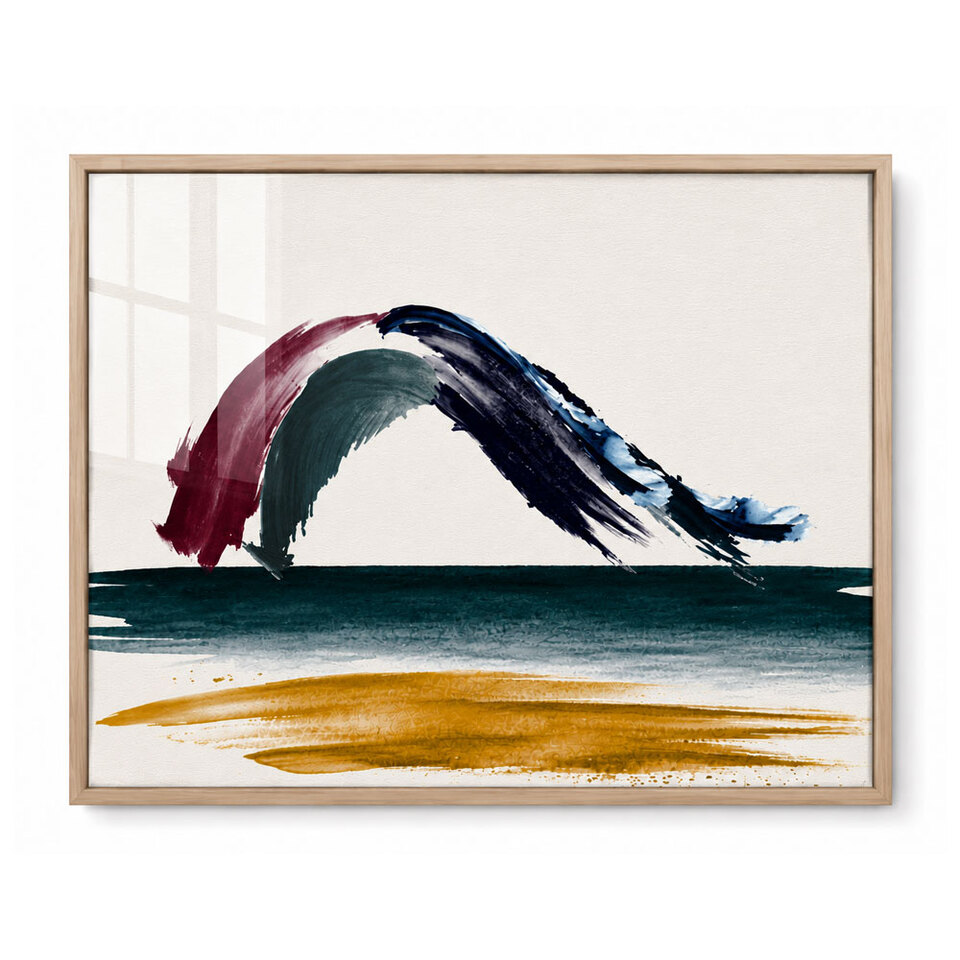
Framed glass prints feature fine art paper artwork protected behind glass within a timber frame - available in black, white or natural, with specialty frames available on request. The result is cleaner, sharper and more polished visually.
Colours often appear more vivid under glass, especially with high-contrast or graphic artwork. The finish feels structured and refined - ideal for interiors leaning modern, minimalist or editorial. The glass also provides full protection from dust and moisture.
Specialty frames available on request. Ready to hang with hardware included. Dispatched in 5-9 business days.
Texture vs Sharpness
Canvas feels softer and more atmospheric. Glass feels sharper and more structured. Neither is universally better - it depends entirely on the feeling you want the room to have.
If your home has a lot of hard surfaces - stone, polished concrete, tiles or metal - canvas helps soften the space. If your interior is already heavily textured or neutral, framed glass introduces clarity and structure.
Canvas creates warmth and calm. Glass creates contrast and crispness.
What each finish pairs with
Floating canvas pairs beautifully with oak and natural timber, linen and bouclé, earthy neutral tones, rattan and woven textures, and warm ambient lighting. It feels organic and gallery-inspired.
Framed glass pairs well with black accents and hardware, minimal monochrome interiors, architectural and structured spaces, modern lighting and clean lines. It feels polished and designer-led.
Many of the best-styled NZ homes combine both - canvas as the anchor, glass adding contrast and definition.
Glare, cleaning and care
Framed glass prints are easier to wipe clean and protect the artwork fully. Canvas requires slightly more care - avoid direct moisture and dust with a soft dry cloth.
Canvas has one major practical advantage - no glare. In bright homes with large windows or direct sunlight, glass can reflect light heavily depending on placement. Canvas remains easy to view from every angle in any light.
For humid rooms such as bathrooms, framed glass is the better choice for print protection.
"The finish you choose changes the emotional tone of your artwork more than most people expect. Choose for how you want the room to feel - not just how you want it to look." Willa Black Prints
Warmth, texture and depth
- Warmth and a softer atmosphere
- Large statement artwork with real depth
- A relaxed contemporary look
- No glare in light-filled rooms
- A gallery-inspired finish without glass
- Canvas with Maori-inspired or painterly works
Clarity, contrast and polish
- Sharp detail and vivid colour
- Cleaner, more structured lines
- Gallery wall styling with definition
- A polished modern aesthetic
- Full print protection behind glass
- Crisp presentation of graphic or detailed artwork
Living Room
Canvas creates warmth without formality. Large works above sofas anchor open-plan spaces without any glass glare. Framed glass suits gallery walls and layered arrangements.
Bedroom
Canvas creates a relaxed, matte atmosphere that suits linen textures and earthy palettes. Framed glass suits cleaner, more minimal bedroom styling.
Hallways and Entry
Glass reflects available light and makes artwork brighter in lower-light transitional spaces. Smaller framed pieces create strong visual rhythm along a hallway.
Dining Room
Canvas feels grounded with timber and warm lighting. Glass feels elevated in darker, contemporary dining rooms. Either works depending on the room's mood.
Home Office
Framed glass with graphic or black-and-white artwork creates clarity and focus. Canvas softens offices that otherwise feel too clinical or corporate.
Gallery Walls
Both finishes work. Keep a consistent frame colour across mixed finishes. Use floating canvas as the anchor piece and framed glass for contrast and definition around it.
Go larger than your first instinct
Both finishes reward scale. A single canvas or framed print often has far more impact when given proper room to breathe. Over a sofa, bed or buffet, the artwork should feel intentional - not like an afterthought floating in too much wall space. Between sizes, go larger more often than not.
Frame colour changes the tone of both finishes
Black frames sharpen graphic work and suit modern interiors for both canvas and glass. Natural timber softens the effect and brings warmth, especially where the art references landscape or organic forms. White frames work well in lighter spaces but can reduce drama if the piece relies on contrast.
Consider light before you decide
How much natural light hits the wall? A south-facing wall with indirect light handles glass well. A north-facing wall in full afternoon sun may create glare behind glass depending on placement. Canvas avoids this issue entirely and remains easy to view from every angle throughout the day.
Floating canvas suits Abstract landscapes particularly well
The texture of canvas adds a layer of depth to artwork that already has organic, cultural or painterly qualities. Maori-inspired prints, abstract landscapes and works with earthy palettes tend to gain presence on canvas in a way that glass cannot replicate. The artwork feels less like a reproduction and more like a work in its own right.
For Australian buyers - canvas travels well
For buyers in Australia, floating canvas is a popular choice for its versatility across coastal homes, creative workspaces and urban apartments. The natural warmth of canvas complements Australian interior palettes - timber, stone, linen and neutral tones - without feeling forced. It ships safely and looks strong in both compact and generous spaces.
Not sure which to choose? We can help
If you are deciding between finishes for a specific wall or room, contact us for a custom quote. Tell us about your space, the print you are considering, and how you want the room to feel - and we will recommend the right finish, size and frame colour for your situation.
Willa Black Prints NZ
See all three finishes side by side.
Our print finishes guide walks you through unframed, framed with glass and floating canvas - with full specs, frame colour options and a room-by-room comparison.
View the Print Finishes Guide